




AMD Ryzen Processors: Which One Is Right for You?
The short answer: if the machine is mainly for gaming, buy an X3D chip. The Ryzen 7 9800X3D is the one most people should be looking at, and it sits in the G6 Apex 4 at £2599.99. If the machine also renders, encodes or compiles for a living, core count matters more than cache and a Ryzen 9 earns its price. Everything below explains why, with the real prices we build them at. Every one is assembled by hand in Wolverhampton and shipped free to UK mainland addresses.
Tell Kevin on 01902 714533 what you play, what monitor you are on, and what else the machine has to do. He will name the right Ryzen for it, including the times the answer is a cheaper one.
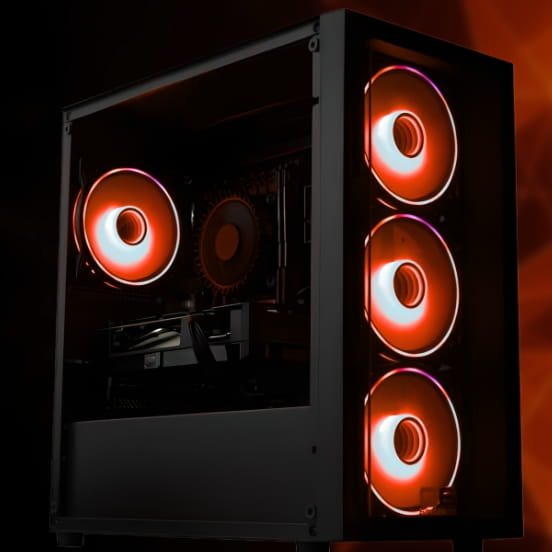
Four Things Separate One Ryzen From Another
Model numbers hide the decision. These four differences are what a Ryzen chip is made of, and only one of them decides most gaming builds.
3D V-Cache, the X3D in the name
Cache is fast memory sitting on the processor itself. AMD stacks an extra slab of it with the cores, beneath them on the current chips, which is what the X3D suffix means. Games ask for small pieces of data thousands of times a second, so keeping that data on the chip instead of fetching it from system memory raises frame rates in a way extra cores never do. This is the single biggest gaming difference in the whole Ryzen range.
Core count, the tier number
Ryzen 5 is six cores, Ryzen 7 is eight, Ryzen 9 is twelve or sixteen. Games rarely use more than eight well, so the jump from a Ryzen 7 to a Ryzen 9 buys almost nothing at the frame rate. It buys a great deal in work that splits across every core at once: video exports, 3D renders, compiling code, running virtual machines. Buy cores for work, not for games.
Clock speed
The boost clock is the top speed one core reaches when a task demands it, quoted in GHz. Across the current range it runs from 5.2GHz to 5.7GHz, so the spread is narrow and the practical difference between two chips a few hundred MHz apart is small. Clock speed is worth reading, and it is rarely the number that decides a purchase.
The AM5 platform
Every Ryzen chip we build with today drops into the AM5 socket and uses DDR5 memory, always as a matched pair of sticks in dual channel, never a single stick. AM5 is the socket AMD has committed to for years to come, so a processor upgrade later means a chip and a BIOS update rather than a new motherboard and memory. Read the detail in our guide to AM5 against the older AM4 platform.
Three Ryzen Generations, All Still Worth Buying
Newer is not automatically better value. Here is what each generation is for, and where the older ones still win on price.
- Ten chips, 6 to 16 cores
- 3D V-Cache on five of them
- Fastest gaming CPUs available
- Best for: any new build in 2026
- 6 to 8 cores
- Same AM5 socket and DDR5 memory
- Behind the G6 Fusion 600 and 800
- Best for: a first AMD gaming PC
- 6 to 16 cores
- 7800X3D still a top gaming chip
- Behind the G6 Apex 1, 2 and 3
- Best for: gaming on a tighter budget
What the Tier Number Buys You
The number after the word Ryzen is a core count, not a quality score. A Ryzen 5 is not a compromised Ryzen 9.
- 6 cores, 12 threads
- 32GB DDR5 5200MHz (2x16GB) Dual Channel typical
- Paired with: RTX 5060 to RX 7600
- Best for: 1080p and 1440p gaming
- 8 cores, 16 threads
- 96MB of L3 cache, 64MB of it stacked
- Paired with: RTX 5070 to RTX 5080
- Best for: high refresh 1440p, committed 4K
- 12 or 16 cores, 24 or 32 threads
- Up to 208MB of total cache
- Paired with: RTX 5080 to RTX 5090
- Best for: creators, streamers, simulation
Still deciding between the top two tiers? Our guide to which Ryzen 9 is best for gaming goes through the twelve and sixteen-core chips one by one.
Why AMD Wins the Gaming Argument in 2026, and Where It Does Not
For gaming specifically, AMD holds the top of the market and has done since 3D V-Cache arrived. The reason is narrow and worth understanding, because it explains which Ryzen to buy and which to leave alone. A game engine spends its time asking for small pieces of data over and over: the position of things, the state of the world, the next few frames of animation. Fetching those from system memory takes time the frame does not have. Stacking 96MB of extra cache directly on the processor keeps that data within reach, and frame rates rise, particularly the low ones that show up as stutter. No amount of extra cores does the same job, which is why an eight-core Ryzen 7 9800X3D outruns a sixteen-core Ryzen 9 9950X in games while costing less.
That is the whole case, and it has limits. Cache does nothing for a video export, a Blender render or a compile, all of which split neatly across every core available. If the machine earns its living between games, the argument reverses and cores win. This is the fork in the road: cache for frames, cores for work, and a Ryzen 9 X3D for the person who genuinely does both at a level where waiting costs money.
Intel is still the right answer often enough that we keep building with it. Where a buyer wants quick video work alongside gaming at a mid-range price, or is upgrading inside an existing Intel platform, or has landed on a Core Ultra machine that prices better on the day, we will say so. We sell both because both are correct some of the time, and there is no version of this where the more expensive chip is the automatic recommendation. If you are weighing the platforms up, our comparison of an Intel i5 against a Ryzen 5 covers the mid-range decision in detail, and the full Intel gaming PC range sits alongside the AMD one.
What we build around these chips matters as much as the chip. An X3D processor runs hot in a small area and rewards a cooler that keeps up, so the 360mm liquid cooling that is standard from the Apex 2 up is there for a reason rather than for the look of it. Memory goes in as a matched pair in dual channel, because a single stick halves the bandwidth the processor has to work with, and the memory profile is set and confirmed before the machine leaves. Then every build runs for a full 24 hours under load in Wolverhampton, which is where a marginal chip, an unstable memory profile or a lazy cooler mount announces itself, rather than in your living room three weeks later.
After that, the person who built it answers the phone. Kevin has been building these machines since 2001 and takes the calls himself on 01902 714533, so the conversation about which Ryzen you need is with someone who fits them daily and who has no interest in selling you a sixteen-core processor for a machine that plays games. Every build carries a 3-year warranty, and the range runs from around £1050 to over £5800 depending on how far up the graphics card ladder you go.
Which AMD Machine Should You Look At?
Four builds that cover most of the range, each answering a different question. All four are in stock and hand-built to order in Wolverhampton.
None of those quite fit? Every AMD build is configurable, and the whole range is on the AMD custom PC builder. Call Kevin on 01902 714533 or email [email protected] with four things and he will name the build:
1. The games you play most often. 2. Your monitor resolution and refresh rate. 3. Whether you stream, record or edit alongside gaming. 4. Your approximate budget.
Prices shown are the live prices at the time of writing and each product page carries the current figure. 0% finance available via PayPal Pay in 3 on orders over £500. Subject to status.
Common Questions About AMD Ryzen Processors
The Ryzen 7 9800X3D is the one most gamers should buy. Eight cores, 96MB of L3 cache with 64MB of it stacked, and a price well below the sixteen-core chips above it. The newer Ryzen 7 9850X3D is a few percent quicker for a small premium, and the Ryzen 9 9950X3D matches it in games while adding sixteen cores for rendering and encoding. If the budget is tighter, the Ryzen 5 7500X3D and Ryzen 7 7800X3D carry the same cache technology for less. Ginger6 fits the 9800X3D in the G6 Apex 4 at £2599.99.
X3D means AMD has stacked an extra layer of cache memory with the processor cores, sitting beneath them on the current generation, which AMD calls 3D V-Cache. Cache is fast memory the processor reaches without going out to system RAM. Games request small pieces of data constantly, so holding more of it on the chip raises frame rates and smooths out the dips that show up as stutter. An X3D chip is faster in games than a non-X3D chip with more cores, and it makes no difference to video exports or 3D rendering, which use cores rather than cache.
Not by enough to justify the money if gaming is all the machine does. Games rarely use more than eight cores well, so a sixteen-core Ryzen 9 and an eight-core Ryzen 7 X3D land close together on frame rates, and the Ryzen 7 costs less. A Ryzen 9 is the right buy when the machine also renders, encodes, compiles or runs virtual machines, where every extra core shortens the wait. Ginger6 will say so on the phone rather than sell the larger chip by default.
For casual streaming, no. Modern graphics cards encode the stream themselves, so an eight-core Ryzen 7 X3D handles gaming and streaming together without losing frames. A Ryzen 9 earns its price when the editing is the job rather than the hobby: exporting long 4K timelines, rendering 3D scenes, running heavy effects. The Ryzen 9 9950X3D is the chip that does both well, with sixteen cores for the work and 3D V-Cache so the games are not compromised. Ginger6 fits it in the G6 Apex 5 at £3209.99.
Match the monitor to the graphics card rather than the processor. A Ryzen 5 or Ryzen 7 build with an RTX 5060 or RTX 5060 Ti suits a 1080p or 1440p screen at 144Hz to 180Hz. A Ryzen 7 X3D with an RTX 5070 Ti suits 1440p at high refresh or 4K at 60Hz and above. A Ryzen 9 build with an RTX 5080 or RTX 5090 is where a 4K 144Hz panel makes sense. Adaptive sync, sold as FreeSync or G-Sync, is worth having at every tier because it removes tearing when frame rates move around.
Every current Ryzen desktop processor uses the AM5 socket and DDR5 memory. Ginger6 builds on A620, B650 and X870 boards depending on the tier. The Apex range carries Wi-Fi 6E or Wi-Fi 7 and Bluetooth onboard, and the Fusion builds use an A620M board with Wi-Fi supplied by an included 433Mbps USB adapter. AM5 is the platform AMD has committed to for several more years, so a processor upgrade later means a new chip and a BIOS update rather than a new motherboard and a new set of memory. The older AM4 socket used DDR4 and has reached the end of its road for new builds.
Yes. Every Ginger6 AMD machine is configurable before it is built, and the processor dropdown on each product page shows the alternatives with the exact price difference against the standard chip. On the G6 Apex 4 the choice runs from the Ryzen 5 7500X3D at £192 less than standard up to the Ryzen 9 9950X3D at £208.80 more. Memory, storage, graphics card, cooling and case are configurable in the same way, and the price updates as options are selected.
Every Ginger6 machine ships with a 3-year warranty as standard, with longer parts cover available at checkout. Before it ships, each build is assembled by hand in Wolverhampton, has its memory profile and BIOS settings confirmed, and runs for a full 24 hours under load so a marginal component fails here rather than at your desk. Delivery to UK mainland addresses is free, and the person who answers the phone on 01902 714533 is the person who built the machine.
Go Deeper on the AMD Range
Every Ryzen 9000 Chip Explained
All ten current chips side by side, what each one is for, and the real price to put one in a machine.
Read the GuideWhich Ryzen 9 Is Best for Gaming?
The twelve and sixteen-core chips compared, and an honest look at when a Ryzen 9 is more processor than you need.
Read the GuideBrowse All AMD Gaming PCs
The full Ginger6 AMD range, from the Fusion 600 to the Apex 6, all built and tested in Wolverhampton.
View AMD PCsReady to Choose Your AMD Ryzen PC?
Whichever Ryzen is right for you, the machine is assembled by hand in Wolverhampton, stress-tested for 24 hours, and backed by a 3-year warranty. The person who answers your call is the person who builds it.