




Gaming PCs Built for
Elden Ring
Elden Ring has a 60fps frame rate cap in the base game. The goal is not to exceed 60fps — it is to hit it consistently at the highest resolution and settings your build allows. GPU-led and well-optimised relative to its visual quality, the hardware decision here is simpler than most open world titles.
Browse the builds below or call Kevin on 01902 714533. Tell him your target resolution, whether you play on a 60fps cap or use an reach mod, and your budget — he will confirm the right build for the Lands Between.


Grid List
4 Item(s)
-
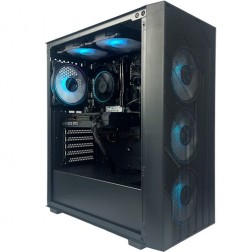
Intel Core i5 12400F RTX 5050 Gaming PC - G6 Infinity X2
Intel Core i5 12400F 6 core
H610M Motherboard
16GB+ DDR5 5200MHz
1TB+ M.2 NVMe SSD
8GB Nvidia RTX 5050 Graphics
433mbps Wifi
Windows 11 Home£1,396.56
£1,314.99
Intel Core i5 12400F RTX 5050 Gaming PC - G6 Infinity X2£1,396.56
£1,314.99
Intel Core i5 12400F 6 core
H610M Motherboard
16GB+ DDR5 5200MHz
1TB+ M.2 NVMe SSD
8GB Nvidia RTX 5050 Graphics
433mbps Wifi
Windows 11 Home
-
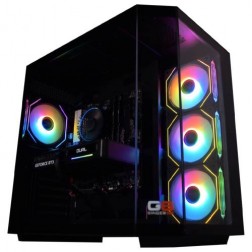
AMD Ryzen 7 8700f Nvidia RTX 5070 Gaming PC - G6 Fusion 800 X5
AMD Ryzen 7 8700f 8 core
A620M Motherboard
16GB+ DDR5 5200MHz
FAST 1TB M.2 NVMe SSD
12GB Nvidia RTX 5070 Graphics
433mbps Wifi
Windows 11 Home£2,019.90
£1,899.99
AMD Ryzen 7 8700f Nvidia RTX 5070 Gaming PC - G6 Fusion 800 X5£2,019.90
£1,899.99
AMD Ryzen 7 8700f 8 core
A620M Motherboard
16GB+ DDR5 5200MHz
FAST 1TB M.2 NVMe SSD
12GB Nvidia RTX 5070 Graphics
433mbps Wifi
Windows 11 Home
-

AMD Ryzen 5 8400f RTX 5060 Ti PreBuilt Next Day Gaming PC - G6 ND 1000
AMD Ryzen 5 8400f 6 Core CPU
Gigabyte A620 Motherboard
16GB 5200mhz DDR5 Memory
FAST 1TB M.2 NVMe SSD Drive
Nvidia RTX 5060 Ti Graphics
433mbps Wifi
Win 11 Home£1,587.61
£1,399.99
AMD Ryzen 5 8400f RTX 5060 Ti PreBuilt Next Day Gaming PC - G6 ND 1000£1,587.61
£1,399.99
AMD Ryzen 5 8400f 6 Core CPU
Gigabyte A620 Motherboard
16GB 5200mhz DDR5 Memory
FAST 1TB M.2 NVMe SSD Drive
Nvidia RTX 5060 Ti Graphics
433mbps Wifi
Win 11 Home
-
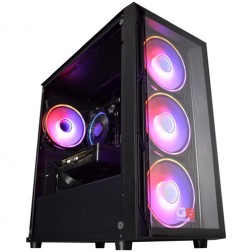
Intel Core i5 12400f RTX 5060 Pre Built Next Day Gaming PC - G6 ND 800
Intel Core i5 12400F 6 Core
H610 Motherboard
16GB DDR5 Memory
1TB M.2 NVMe SSD Drive
8GB Nvidia RTX 5060 Graphics
433MBPs Wifi
Windows 11 Home£1,403.58
£1,249.99
Intel Core i5 12400f RTX 5060 Pre Built Next Day Gaming PC - G6 ND 800£1,403.58
£1,249.99
Intel Core i5 12400F 6 Core
H610 Motherboard
16GB DDR5 Memory
1TB M.2 NVMe SSD Drive
8GB Nvidia RTX 5060 Graphics
433MBPs Wifi
Windows 11 Home
Grid List
4 Item(s)
What Does Elden Ring Actually Need?
The base game has a 60fps cap. The hardware goal at each tier is consistent 60fps at your chosen resolution — not exceeding it. The fourth column covers players using the community frame rate reach patch or playing Elden Ring: Nightreign, which has no cap.
Figures are estimates based on available benchmark data as at . Actual performance varies by CPU pairing, RAM speed, and settings. Kevin will confirm expected performance for your specific setup before you order.
What Each Budget Delivers in Elden Ring
Four honest assessments. The frame rate target at every tier is the same: consistent 60fps. The resolution and visual quality available at that target is what changes.
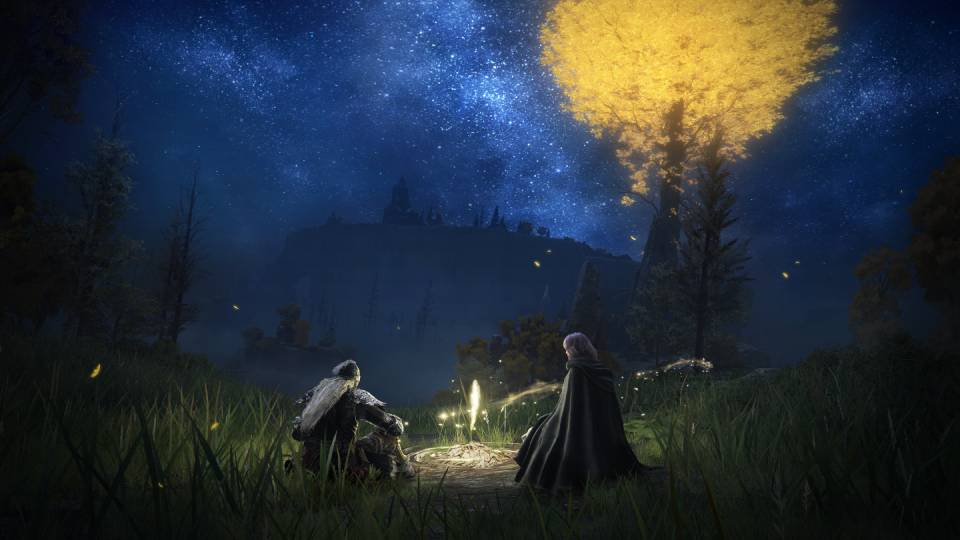
Consistent 60fps at 1080p ultra throughout the Lands Between, including the busiest outdoor areas, the Subterranean Shunning-Grounds, and the demanding legacy dungeon interiors in Leyndell. The 60fps cap is hit comfortably at this tier — the game runs exactly as FromSoftware intended. Elden Ring is genuinely strong visually at 1080p ultra, and an entry-level build here does not feel like a compromise. If 1080p at 60fps is the target, this tier handles it without requiring anything more expensive.
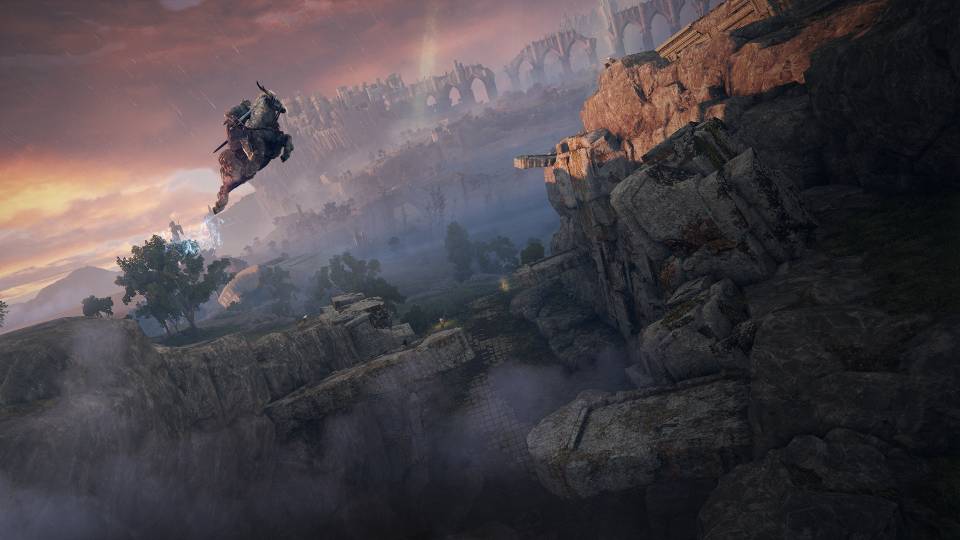
Consistent 60fps at 1440p ultra — the visual sweet spot for Elden Ring. The game's detailed environments, dynamic lighting, and particle effects in boss arenas read significantly better at 1440p than at 1080p. The step up from entry level is justified if you own a 1440p monitor or plan to get one. A mid-range GPU at 1440p exceeds Elden Ring's requirements with headroom to spare — which means performance is consistent even in particle-heavy boss encounters and dense outdoor areas. This tier also covers other open world titles at 1440p high settings, making it a strong general-purpose gaming platform alongside Elden Ring.

Consistent 60fps at 4K ultra settings. Elden Ring at 4K on a quality monitor is one of the best-looking fixed-frame-rate games available — the level of environmental detail in Farum Azula, the Consecrated Snowfield, and Mohgwyn Palace at 4K is exceptional. The high-end tier is overspecified for Elden Ring alone, but that headroom means the same build covers Cyberpunk 2077 at 1440p ray tracing, GTA VI on launch, and other GPU-demanding open world titles at 4K high settings without compromise. The right choice if Elden Ring is one of several demanding games in the library.
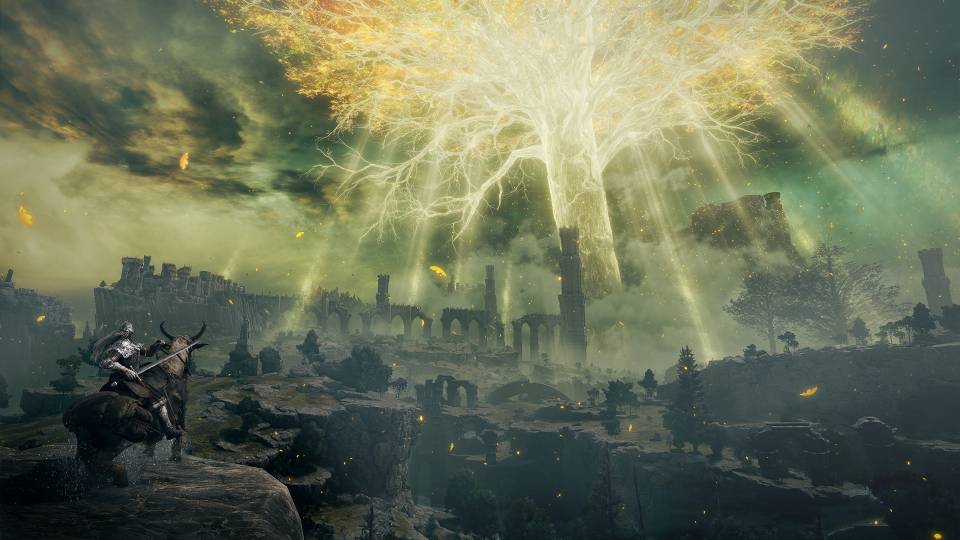
4K above 60fps for players using the community frame rate reach patch or playing Elden Ring: Nightreign, which operates without a frame rate cap. At 4K uncapped, a stronger GPU and faster CPU pairing delivers 90fps+ in many areas, with frame rate varying by scene complexity. The enthusiast tier for Elden Ring is also the right choice when the game sits alongside Black Myth: Wukong, Hogwarts Legacy at 4K, or Cyberpunk 2077 path tracing in a wider library — the GPU is genuinely utilised across the game list rather than being overspecified for a single title.
A Simpler Hardware Decision Than Most Open World Games
Elden Ring is GPU-bound in a straightforward way. There are no rendering mode decisions — no rasterisation versus ray tracing trade-offs, no VRAM thresholds that change the build requirement, no upscaling dependency above a certain resolution. The hardware question is direct: pick a resolution target, pick the GPU that delivers consistent 60fps at that resolution, and the work is done.
The 60fps cap in the base game means the tier breakdown is not about how far above 60fps you get — it is about how consistently you stay at 60fps across the full range of the game's environments. Elden Ring's most demanding areas are its open Legacy Dungeon interiors and the particle-heavy late-game boss encounters. An entry-level GPU at 1080p handles these with headroom. A mid-range GPU at 1440p handles them comfortably. The game is well-optimised relative to the level of visual detail it produces, which is part of what makes it stand out among modern open world titles.
The contrast with other titles in this sub-hub is useful context. Baldur's Gate 3 has a different hardware profile — CPU and RAM intensive in Act 3 city areas rather than GPU-bound. Black Myth: Wukong is significantly more GPU-demanding than Elden Ring — one of the most demanding consumer titles released. A build sized for Black Myth: Wukong at 1440p ultra runs Elden Ring at 4K with substantial headroom. A build sized for Elden Ring at 4K runs Black Myth: Wukong at 1440p high settings with some settings adjustments.
If you are moving from a console version of Elden Ring to PC, the upgrade from 30fps to consistent 60fps is the most significant improvement — more noticeable in this game than in most, because the demanding timing windows in Elden Ring's combat are directly affected by frame rate. A mid-range Ginger6 build at 1440p delivers both the frame rate improvement and a meaningful visual upgrade over the console experience.
See the Difference Resolution Makes
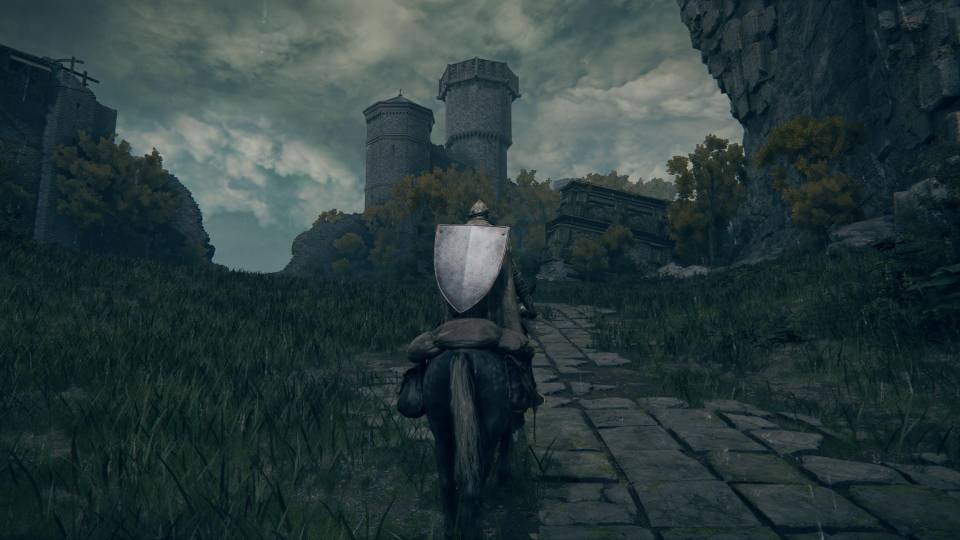
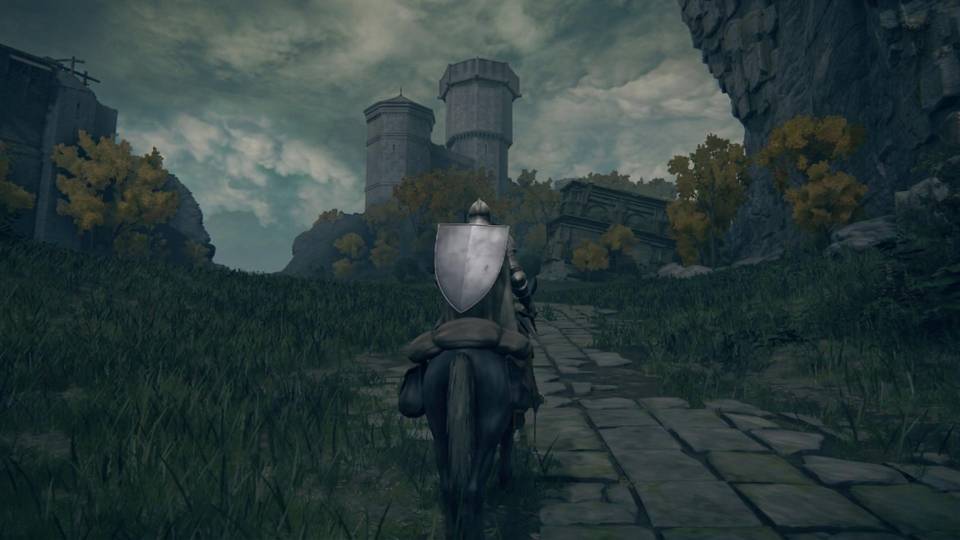
Drag the slider to compare 1080p medium settings against 4K ultra. Elden Ring's well-optimised engine and strong art direction mean the game holds up well at lower settings — and rewards higher resolutions with exceptional environmental detail.
Which Elden Ring Player Are You?
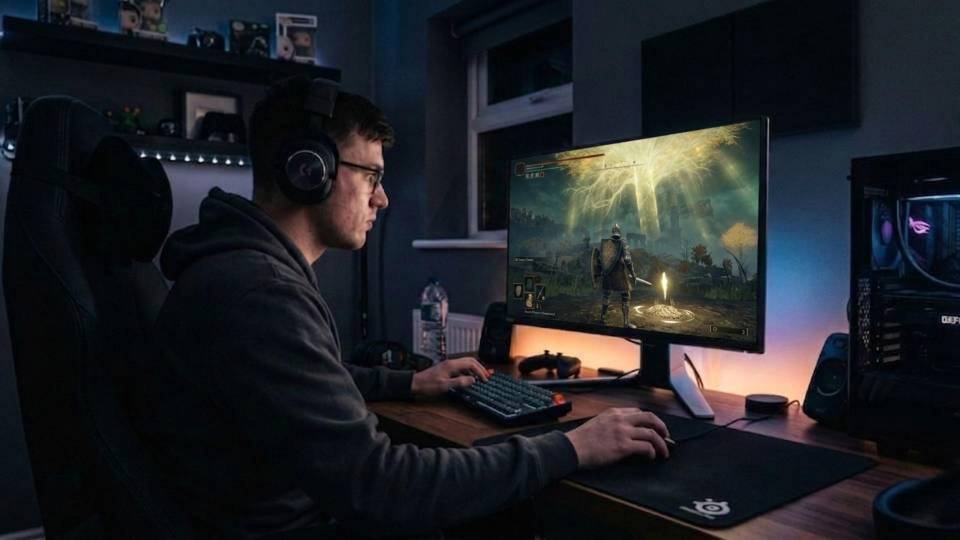
Elden Ring is the first Soulslike and possibly the first PC gaming purchase. The entry-level build at 1080p ultra delivers the game exactly as intended at 60fps — better than the console experience and without paying for hardware capability the game does not use. If the PC will also be used for other games, call Kevin with the full list and he will confirm the right tier for the whole library.
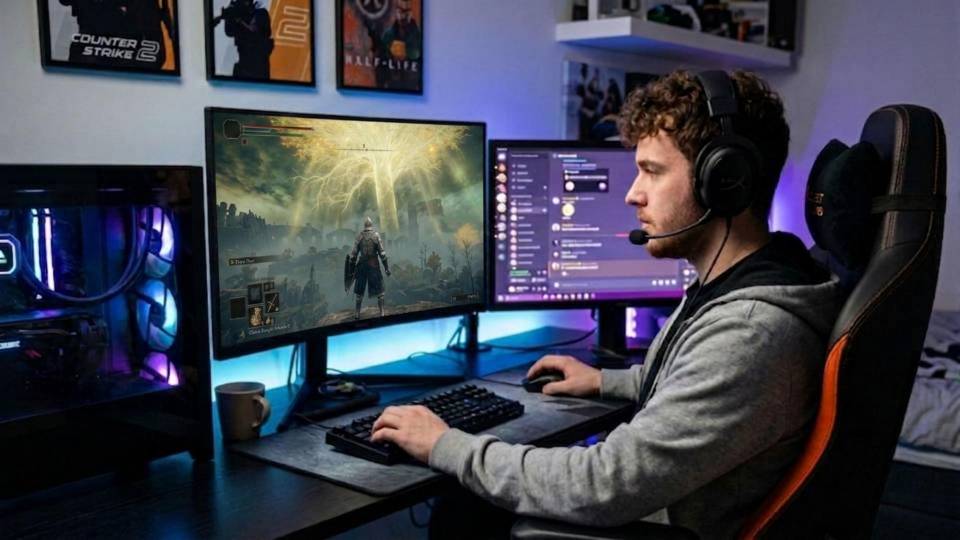
Already experienced Elden Ring at 30fps on console. Moving to PC for the frame rate improvement and the visual upgrade that comes with it. The 30fps-to-60fps change in Elden Ring is particularly significant given the game's timing demands. A mid-range build at 1440p delivers both the frame rate improvement and a noticeable visual improvement over the console experience — textures, draw distance, and particle effects all benefit from the step up in resolution.
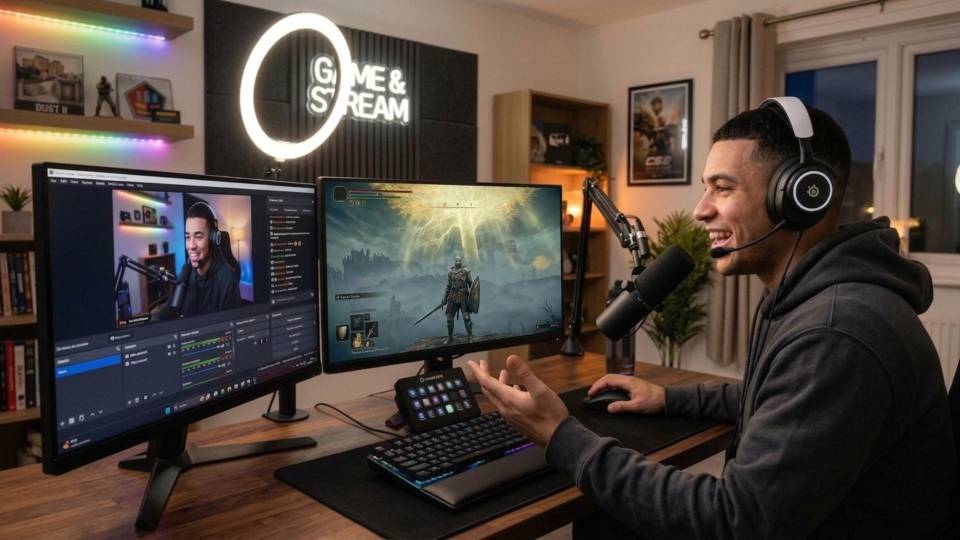
Plays every area of the Lands Between thoroughly — wants Farum Azula, Mohgwyn Palace, and the Haligtree to look as good as they possibly can. 4K ultra is the target. A high-end build hits consistent 60fps at 4K ultra with headroom for the most demanding areas. If the library also includes Black Myth: Wukong or Cyberpunk 2077 at 4K, size for those titles — a build chosen for the most demanding game in the list runs Elden Ring at 4K without any adjustment.
Call Kevin on 01902 714533 or email [email protected]. Tell him:
1. The games you play most often
2. Your monitor resolution and refresh rate
3. Whether you stream, record, or edit alongside gaming
4. Your approximate budget
No charge for the conversation. No pressure to buy.
How Elden Ring Compares to Similar Titles
Recommended Builds for Elden Ring
Three tiers covering the full resolution range — all targeting consistent 60fps at their respective settings.
RTX 5050 or RX 9060 XT with a Core i5 or Ryzen 5. Delivers consistent 60fps at 1080p ultra settings across the full game, including the most demanding legacy dungeon interiors and particle-heavy boss encounters. The right starting point for Elden Ring at 1080p — and a strong foundation if other less-demanding games are also in the library.
RTX 5060 or RX 9060 XT with a Core i5 or Ryzen 5. 1440p ultra with consistent 60fps throughout — the resolution where Elden Ring's environmental detail is most clearly visible and the frame rate cap is met with headroom. The most popular tier for players upgrading from a 1080p monitor or moving from console. Handles other open world titles at 1440p high settings comfortably within the same build.
RTX 5060 Ti or RX 9070 with a Core i7 or Ryzen 7. Consistent 60fps at 4K ultra — a comfortable margin above what the game requires at that resolution. The Lands Between at 4K on a quality monitor is exceptional. This tier also handles Cyberpunk 2077 at 1440p ray tracing and most other GPU-demanding titles at high settings, making it a strong open world and RPG platform beyond Elden Ring alone.
Not sure which tier is right? Call Kevin on 01902 714533. Tell him your target resolution and whether the build will also run other games. He will confirm the right tier. No pressure to buy.
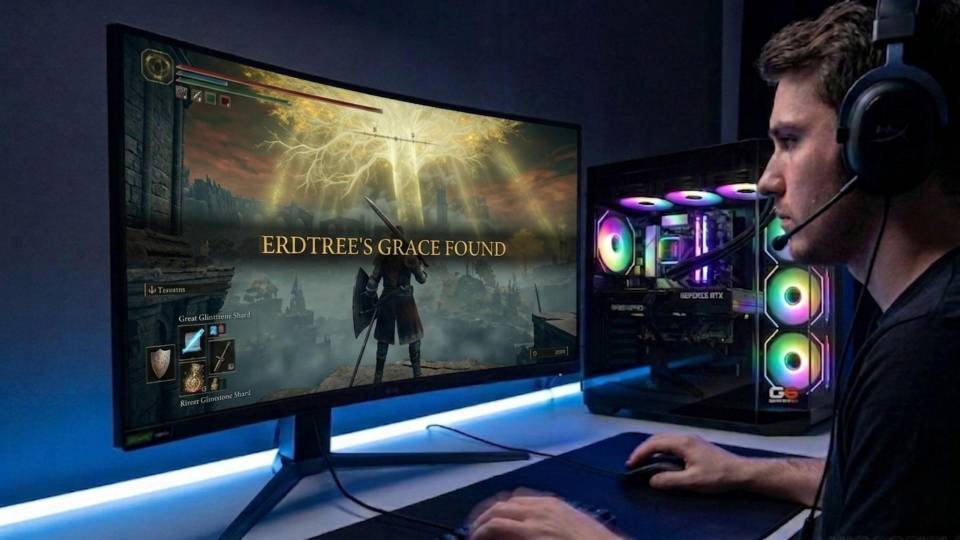
Built for Thermal Stability, Not Just Peak Speed
Elden Ring runs at a sustained, consistent GPU load for the duration of a session. The 60fps cap means the GPU is not sprinting — it is running at a stable output level for hours at a time. The thermal challenge is not peak temperature during a demanding moment; it is maintaining stable temperatures throughout a long session without clock speed drift that introduces frame time inconsistency.
Cable management inside the case is done to support sustained airflow rather than burst cooling. Clean routing keeps intake and exhaust paths unobstructed, which means the GPU maintains its base clock target through an entire Elden Ring session without the fan speed increases that come with airflow restriction. For a game where timing precision matters more than in most open world titles, a CPU or GPU that drifts in clock speed under thermal pressure has a more noticeable effect on gameplay than it would in a less demanding combat system.
BIOS settings, memory profiles, and firmware stability are confirmed before dispatch. XMP or EXPO memory profiles are enabled and verified under sustained load — not just during initial boot. Every build runs a 24-hour stress test covering thermal behaviour under load, processor and graphics stability during extended use, memory responsiveness and system stability, storage performance and consistency, and BIOS firmware stability. For an Elden Ring build, the thermal test at sustained load is the most relevant validation — the game runs at consistent GPU utilisation for exactly the kind of duration the stress test is designed to replicate.
Kevin backs every build with a 3-year warranty. At entry and mid-range tiers where Elden Ring is the primary game, Kevin's approach is to confirm you are not spending more than you need to — the game runs well at modest hardware levels, and the conversation before purchase is as useful as the warranty that follows it. Kevin is reachable on 01902 714533.
What Do Ginger6 Customers Say?
Over 1,100 verified reviews with a 93% five-star rating.
Every review from a real customer. Common themes: honest advice on which tier genuinely suits the games being played, builds that perform as stated from day one, and support available when it matters.
Read All Trustpilot Reviews"Just received my third computer from Ginger6 and I could not be any happier, from the initial call to tweak a few things and the updates up until shipping. This computer is a beast and I have been tweaking gaming settings to the max. Thanks to all the Ginger6 team."
"I emailed Kevin to be sure if what I put down to order was suitable, Kevin supported me to change a few things around and since having the PC for a few weeks it is absolutely amazing and a stunning looking PC. Also fast service and delivery. I recommend Ginger6 as I will be upgrading from them in the future."
"Had a gaming machine built to my own spec. Build looked fantastic, really neat and tidy. After sale service was great and that is a key thing with a new build. The phone was answered on second or third ring when I called. Emails answered quickly. Altogether really satisfied."
Elden Ring Hardware Questions
An RTX 5060 or RX 9060 XT is more than sufficient for consistent 60fps at 1440p ultra in Elden Ring. The game is well-optimised and the GPU overhead at 1440p is modest relative to the visual quality it delivers. Even in the most demanding areas — dense boss particle effects, the Subterranean Shunning-Grounds, and the Haligtree interior — a mid-range GPU holds the 60fps cap without dipping. A faster GPU at this resolution simply means more headroom, not a higher target frame rate in the base game.
Yes, the base game has a 60fps cap. This is a deliberate design choice from FromSoftware — the game's physics and animation systems are tied to the frame rate. A community-developed patch removes the cap and allows the game to run above 60fps, but it is not officially supported and behaviour above 60fps is not guaranteed to be stable across all areas. Elden Ring: Nightreign, the separate multiplayer-focused title, does not have a frame rate cap. If playing above 60fps is the goal, the uncapped column in the hardware thresholds section above covers that scenario.
Elden Ring does not natively support DLSS or FSR as of the current version. The game's optimisation means upscaling is not required at any resolution within the hardware ranges covered here — a mid-range GPU hits 60fps at 4K ultra without needing the frame rate recovery that upscaling provides. DLSS and FSR become relevant in games where the GPU workload outpaces what native rendering sustains at the target frame rate. In Elden Ring, that threshold is not reached at any practical resolution with current hardware.
1440p is the more rewarding resolution for Elden Ring if the build and monitor support it. The game's environmental detail — the texture work in legacy dungeons, the lighting in outdoor Lands Between areas, and the particle effects in boss encounters — benefits clearly from the step up in pixel count. 1080p at ultra settings is a strong result and the game holds up well at that resolution, but 1440p is where most players who have experienced both feel the game is at its visual best without needing 4K. The hardware overhead of 1440p over 1080p in Elden Ring is modest, making the step up cost-effective.
Elden Ring is GPU-bound rather than CPU-bound. A mid-range Core i5 or Ryzen 5 paired with a strong GPU does not produce a meaningful performance difference compared to a Core i9 in Elden Ring — the GPU is the component driving frame rate at every resolution. The CPU becomes relevant if the build also runs CPU-demanding titles like Starfield or Baldur's Gate 3, where a faster processor delivers a more noticeable improvement. For Elden Ring specifically, the GPU budget is where the priority sits.
Yes. Elden Ring runs comfortably within an 8GB VRAM budget at all resolutions up to and including 4K ultra. The game does not have the VRAM-intensive texture streaming requirements of titles like Cyberpunk 2077 at 4K with ray tracing. There are no VRAM threshold concerns in Elden Ring — the GPU choice is driven by raw performance rather than VRAM capacity, and 8GB covers the game fully across all practical settings combinations.
Yes. FromSoftware titles share a consistent optimisation philosophy — they run well relative to their visual output across a wide range of hardware. A build sized for Elden Ring at 1440p ultra handles Dark Souls 3, Sekiro, and Armored Core VI at 1440p or 4K without requiring any adjustment. Elden Ring: Nightreign, which has no frame rate cap, benefits from the same GPU headroom — a mid-range build at 1440p delivers strong performance above 60fps in Nightreign where the hardware constraint is removed.
Shadow quality and anti-aliasing have the most impact on frame rate in Elden Ring at any resolution. Reducing shadow quality from maximum to high gives a noticeable performance gain without a significant visual change in most areas. Anti-aliasing at maximum adds GPU overhead — a slight reduction maintains image quality while recovering frame rate headroom. For a Ginger6 mid-range build at 1440p, these settings do not need to be reduced — the build handles maximum settings with headroom. They are relevant for players on older hardware or entry-level builds who want to extend performance without upgrading the GPU.
Find the Right Build for the Lands Between
Browse the gaming PC range or call Kevin directly. Tell him your target resolution, whether you play on a 60fps cap or use an reach patch, and your budget. He will confirm the right build for consistent 60fps in Elden Ring.