





Gaming PCs Built for Assetto Corsa Competizione
ACC runs on Unreal Engine 4. Wet track reflections, night racing lights, and dynamic weather push the GPU harder than any other sim racing title. If you plan to race in VR, size one tier higher than the flat-screen recommendation — VR doubles the GPU load. Find the right build for your screen setup and target resolution below.
Browse the builds below or call Kevin on 01902 714533. Tell him your target resolution, whether you use VR, your screen count, and your budget.


Grid List
6 Item(s)
-
 Intel Core i5 12400F Nvidia RX 7600 Gaming PC - G6 Infinity X4
Intel Core i5 12400F 6 core
H610M Motherboard
16GB+ DDR5 5200MHz
1TB+ M.2 NVMe SSD
8GB Radeon RX 7600 Graphics
300mbps Wifi
Windows 11 Home£1,139.99
£1,069.99
Intel Core i5 12400F Nvidia RX 7600 Gaming PC - G6 Infinity X4£1,139.99
£1,069.99
Intel Core i5 12400F 6 core
H610M Motherboard
16GB+ DDR5 5200MHz
1TB+ M.2 NVMe SSD
8GB Radeon RX 7600 Graphics
300mbps Wifi
Windows 11 Home
-
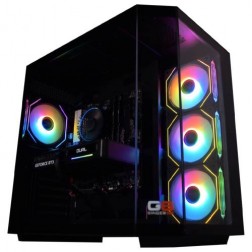 AMD Ryzen 7 8700f Nvidia RTX 5070 Gaming PC - G6 Fusion 800 X5
AMD Ryzen 7 8700f 8 core
A620M Motherboard
16GB+ DDR5 5200MHz
FAST 1TB M.2 NVMe SSD
12GB Nvidia RTX 5070 Graphics
300mbps Wifi
Windows 11 Home£1,579.99
£1,480.00
AMD Ryzen 7 8700f Nvidia RTX 5070 Gaming PC - G6 Fusion 800 X5£1,579.99
£1,480.00
AMD Ryzen 7 8700f 8 core
A620M Motherboard
16GB+ DDR5 5200MHz
FAST 1TB M.2 NVMe SSD
12GB Nvidia RTX 5070 Graphics
300mbps Wifi
Windows 11 Home
-
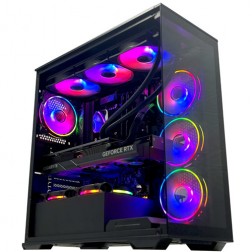 Intel Core i9 14900K Nvidia RTX 5080 Gaming PC - G6 Galactic U3
Intel Core i9 14900KF 24 core
Z790 Motherboard
32GB+ DDR5 5200MHz
FAST 1TB+ M.2 NVMe SSD
16GB Nvidia RTX 5080 Graphics
FAST Wifi & Bluetooth
Windows 11 Home
Intel Core i9 14900K Nvidia RTX 5080 Gaming PC - G6 Galactic U3
Intel Core i9 14900KF 24 core
Z790 Motherboard
32GB+ DDR5 5200MHz
FAST 1TB+ M.2 NVMe SSD
16GB Nvidia RTX 5080 Graphics
FAST Wifi & Bluetooth
Windows 11 Home
-
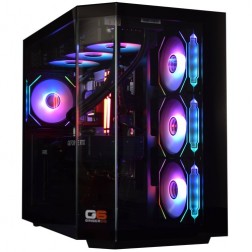 Intel Core Ultra 7 265K Nvidia RTX 5070 Ti Gaming PC - G6 Genesis U2
Intel Core Ultra 7 265Kf 20 core
B860 Motherboard
32GB+ DDR5 5200MHz Memory
FAST 1TB+ M.2 NVMe SSD
16GB Nvidia RTX 5070 Ti Graphics
FAST Wifi & Bluetooth
Windows 11 Home
Intel Core Ultra 7 265K Nvidia RTX 5070 Ti Gaming PC - G6 Genesis U2
Intel Core Ultra 7 265Kf 20 core
B860 Motherboard
32GB+ DDR5 5200MHz Memory
FAST 1TB+ M.2 NVMe SSD
16GB Nvidia RTX 5070 Ti Graphics
FAST Wifi & Bluetooth
Windows 11 Home
-
 AMD Ryzen 5 8400f RTX 5060 Ti PreBuilt Next Day Gaming PC - G6 ND 1000
AMD Ryzen 5 8400f 6 Core CPU
Gigabyte A620 Motherboard
16GB 5200mhz DDR5 Memory
FAST 1TB M.2 NVMe SSD Drive
Nvidia RTX 5060 Ti Graphics
300mbps Wifi
Win 11 Home£1,315.87
£1,150.00
AMD Ryzen 5 8400f RTX 5060 Ti PreBuilt Next Day Gaming PC - G6 ND 1000£1,315.87
£1,150.00
AMD Ryzen 5 8400f 6 Core CPU
Gigabyte A620 Motherboard
16GB 5200mhz DDR5 Memory
FAST 1TB M.2 NVMe SSD Drive
Nvidia RTX 5060 Ti Graphics
300mbps Wifi
Win 11 Home
-
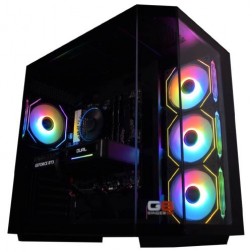 Intel Core i7 12700F 16GB Nvidia RTX 5060 Ti Gaming PC - G6 Storm X5
Intel Core i7 12700F 12 core
H610 Motherboard
16GB+ DDR5 5200MHz
1TB+ M.2 NVMe SSD
16GB Nvidia RTX 5060 Ti Graphics
300mbps Wifi
Windows 11 Home£1,549.99
£1,469.99
Intel Core i7 12700F 16GB Nvidia RTX 5060 Ti Gaming PC - G6 Storm X5£1,549.99
£1,469.99
Intel Core i7 12700F 12 core
H610 Motherboard
16GB+ DDR5 5200MHz
1TB+ M.2 NVMe SSD
16GB Nvidia RTX 5060 Ti Graphics
300mbps Wifi
Windows 11 Home
Grid List
6 Item(s)
What Does ACC Need?
GPU power and VRAM are the primary variables. The CPU needs to be capable but the GPU determines whether wet track reflections run at full quality and whether VR is achievable.
What You Get at Each Price Point
The upgrade path in ACC is GPU-first. Each tier unlocks higher resolution, full wet-weather fidelity, and then VR capability.


Why ACC Pushes the GPU So Hard
Assetto Corsa Competizione uses Unreal Engine 4 — a general-purpose AAA game engine that produces physically-based rendering, volumetric weather systems, and dynamic lighting. Each of these places demands on the GPU that purpose-built sim engines do not. The wet track shader is the clearest example: when it rains in ACC, the engine recalculates how every headlight, track marshal light, and ambient source reflects off puddles and the wet tarmac surface in real time. In dry conditions, the load is substantial. In wet night races at circuits like Spa or the Nurburgring, it is the most GPU-intensive scenario in consumer sim racing.
VR compounds this further. Running ACC in a VR headset requires the engine to render two complete frames simultaneously — one per eye — which approximately doubles the GPU workload at the same settings as a flat screen. A build that runs ACC at 1440p ultra on a monitor will run ACC in VR at medium to high settings at best. This is why the VR recommendation is one full GPU tier higher than the flat-screen spec. For the comparison with iRacing's CPU-led demands, the difference is significant: the sim racing hub covers both ends of the spectrum clearly.
FSR — AMD FidelityFX Super Resolution — is supported in ACC and works on both AMD Radeon and NVIDIA RTX GPUs. It is a practical tool for mid-range builds in wet and night conditions, rendering at a lower internal resolution and upscaling the result. It reduces GPU load meaningfully without a severe image quality penalty at Quality mode. It is not a substitute for a higher GPU tier in VR. Every Ginger6 build is assembled with cable management planned for sustained airflow — the kind that endurance racing in ACC at night in wet conditions actually demands — and stress-tested for 24 hours before leaving the Wolverhampton workshop.
Low vs Ultra — Wet Track
The most GPU-intensive ACC scenario: a wet track with night racing. The slider shows what separates a mid-range build from a high-end build in the conditions that push ACC hardest.


Which ACC Racer Are You?

The Fidelity-First Racer
Flat screen at 1440p ultra, every condition at full quality, no upscaling dependency. The high-end build with an RTX 5070 Ti handles everything ACC generates on a flat screen. You race rain and night events without touching the settings menu.
G6 Apex 4
The VR Simmer
VR gives spatial depth that flat screens cannot match — braking points, car widths, and kerb heights become instinctive. But VR doubles the GPU load in ACC. Size one tier higher than the flat-screen target. The enthusiast build with an RTX 5080 is the right choice for full-fidelity ACC in a headset.
Ryzen 9 RTX 5080
The Competitive Racer
You are lap-time focused, not screenshot focused. The mid-range build with an RTX 5070 and Ryzen 7 X3D delivers consistent performance across all weather at 1440p with FSR. No frame drops in safety car bunches, no settings reduction between sessions.
Ryzen 7 RTX 5070Also Worth Considering
Builds Chosen for ACC
Hand-assembled in Wolverhampton, stress-tested for 24 hours. The thermal test runs the GPU at sustained load — the same load a wet night endurance race in ACC generates, not a synthetic burst.
Ryzen 7 X3D / RTX 5070
1440p high to ultra with FSR in wet and night conditions. The competitive flat-screen tier for ACC — consistent across all race conditions at 1440p. The Ryzen 7 X3D keeps the physics solid across full 30-car GT3 fields.
From £1599
G6 Apex 3Ryzen 7 X3D / RTX 5070 Ti
1440p ultra native in every condition. No upscaling required. The flat-screen sweet spot for ACC. Minimum practical VR tier. The 3-year Ginger6 warranty covers this build from day one.
From £2099
RTX 5070 Ti PCRyzen 9 X3D / RTX 5080
Full-fidelity ACC in VR or 4K ultra on a flat screen. Wet night racing in a headset at maximum settings without frame concession. If VR is your primary setup, this is the correct starting tier — not the high-end build with settings reduced to compensate.
From £2799
G6 Apex 5Not sure whether to size for VR or flat screen? Call Kevin on 01902 714533 — tell him your headset and target settings and he will confirm the right build.

Built for Serious Sim Racers
ACC places sustained GPU load during every session — wet conditions and night lighting keep the graphics card working continuously, not in bursts. Cable management inside a Ginger6 build is planned for airflow that supports this: cooler components maintain their target performance over a full endurance race without throttling. BIOS firmware, memory profiles, and GPU driver configuration are confirmed before dispatch.
The Ginger6 3-year warranty covers parts and labour. Kevin is reachable by phone and email for the life of the machine. No call centres, no ticket queues.
Call Kevin on 01902 714533Trusted by Simulation Buyers
Sim racers buying for ACC arrive with precise requirements — resolution target, VR headset model, whether they race in wet conditions. The reviews below are from customers who called Kevin with exactly that information and received the right build.
"I would rate this pc builder as second to none, I have had no problems with my pc. As I am a sim-racer I therefore need ultra quick responses which you get! Simply tell Ginger6 what you wish from your pc and I give my word you will not be disappointed!"
"10 out of 10 for Ginger6. I needed to upgrade my PC to handle the 4K ultra graphics in my MS flight sim. After a chat with Kevin and a few suggestions from him, I agreed on a very competitive price and a week later my new computer was ready for collection. It has coped with everything I could throw at it with ease. Great product, great price, great company."
"Many thanks to Kevin and his team. With his guidance, I got the exact spec computer I required for my online flight simulator needs. Excellent courteous service with on-time delivery. Would recommend Ginger6 to anybody with specialist computer requirements or not."
Questions About ACC Builds
iRacing uses a custom engine built for physics accuracy over visual fidelity. ACC uses Unreal Engine 4, which delivers physically-based rendering, volumetric weather, and dynamic lighting — all of which fall on the GPU. The wet track shader alone — recalculating real-time reflections across every puddle — adds substantial GPU load that iRacing's engine simply does not produce. Night races with multiple moving light sources compound this further. The gap between the two in GPU demand is meaningful, and the build recommendation reflects it.
VR renders two complete frames simultaneously — one per eye — which approximately doubles the GPU workload at the same settings. A build running ACC at 1440p ultra on a flat screen will run ACC in VR at medium to high settings at best. For smooth, high-fidelity VR in ACC, the RTX 5080 at the enthusiast tier is the right target. If you are deciding between a flat-screen high-end build and a VR build, the GPU tier is the only significant change — call Kevin with your headset model and he will confirm whether the spec needs adjusting.
FSR is supported in ACC and works on both AMD Radeon and NVIDIA RTX GPUs — it is not limited to AMD hardware. FSR Quality mode at 1440p renders the image internally at approximately 1080p and upscales the result, reducing GPU load while preserving most of the image quality. It is a practical tool for mid-range builds in wet and night conditions. It is not a substitute for a higher GPU tier in VR — the additional rendering workload of dual-eye frames is too large for upscaling to compensate adequately.
At 1440p ultra, ACC uses approximately 8 to 10GB of VRAM. A GPU with 12GB VRAM is the practical minimum for 1440p ultra with wet track enabled at all times. At 4K, VRAM consumption increases and 16GB is recommended. In VR, VRAM consumption is similar to 4K rendering because of the dual-eye frame requirement. All Ginger6 simulation builds are specified with the VRAM requirements of the target resolution in mind — confirm the VRAM on your chosen build with Kevin before ordering if you plan to run VR or 4K.
Yes. A high-end or enthusiast ACC build covers iRacing without compromise — iRacing's GPU demands are considerably lower than ACC's and its CPU demands are well within a Ryzen 7 X3D's capabilities. For Flight Simulator 2024, the same GPU tier that handles ACC at 1440p ultra is well matched to MSFS 2024 at 1440p with payware scenery and add-ons. If you race in ACC and fly in MSFS 2024, a single high-end build covers both without needing to size for each sim independently.
Triple screens multiply the GPU rendering workload by approximately three relative to a single monitor at the same resolution. For three 1080p screens in ACC, the high-end build with an RTX 5070 Ti handles full settings including wet and night conditions. For three 1440p screens at full settings, an enthusiast build is the right target. The screen resolution per display is the most important number to give Kevin when you call — it changes the GPU recommendation significantly in ACC because of how GPU-intensive the engine already is at 1440p on a single display.
Find the Right Build for ACC
Browse the gaming PC range or call Kevin directly. Tell him your target resolution, whether you plan to run VR, your screen count, and your budget. He will confirm the right build for ACC at your settings.